

Understanding ACT: Building Resilience Through Mindfulness
We’re back with the eighth edition of Modality Monday! Today, we’re exploring Acceptance and Commitment Therapy (ACT), a mindfulness-based approach designed to help people live a meaningful life while managing difficult thoughts and emotions.
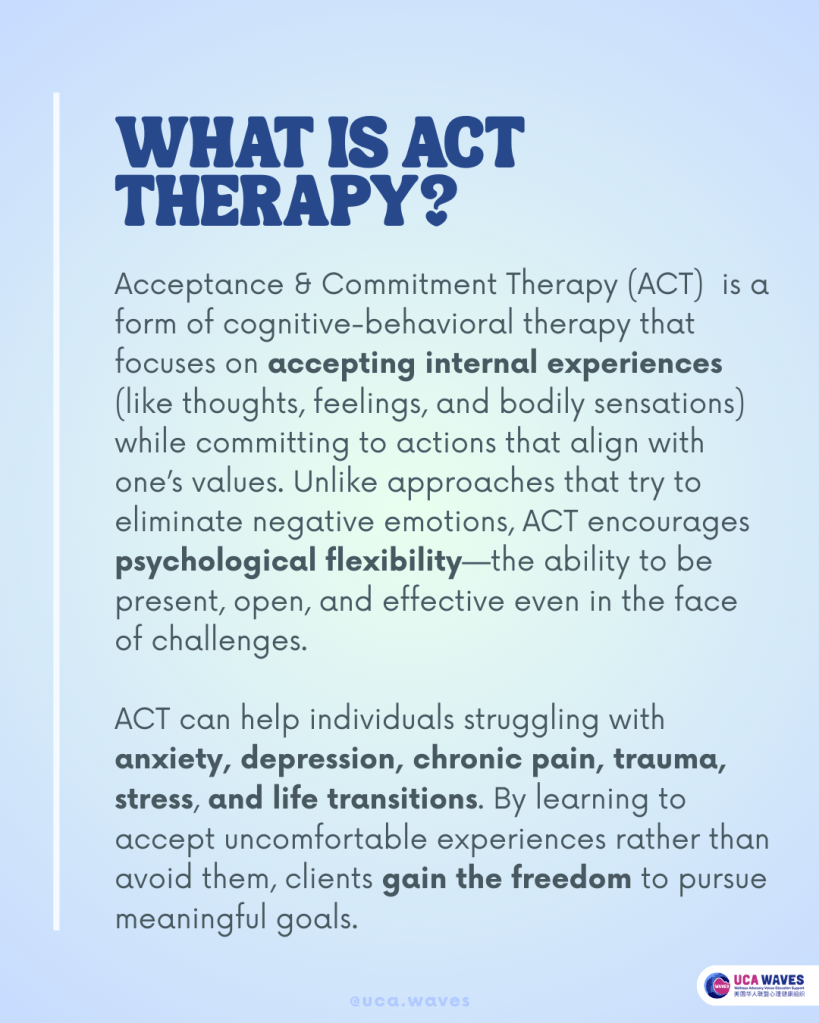
What is ACT?
ACT is a form of cognitive-behavioral therapy that focuses on accepting internal experiences (like thoughts, feelings, and bodily sensations) while committing to actions that align with one’s values. Unlike approaches that try to eliminate negative emotions, ACT encourages psychological flexibility—the ability to be present, open, and effective even in the face of challenges.
ACT can help individuals struggling with anxiety, depression, chronic pain, trauma, stress, and life transitions. By learning to accept uncomfortable experiences rather than avoid them, clients gain the freedom to pursue meaningful goals.
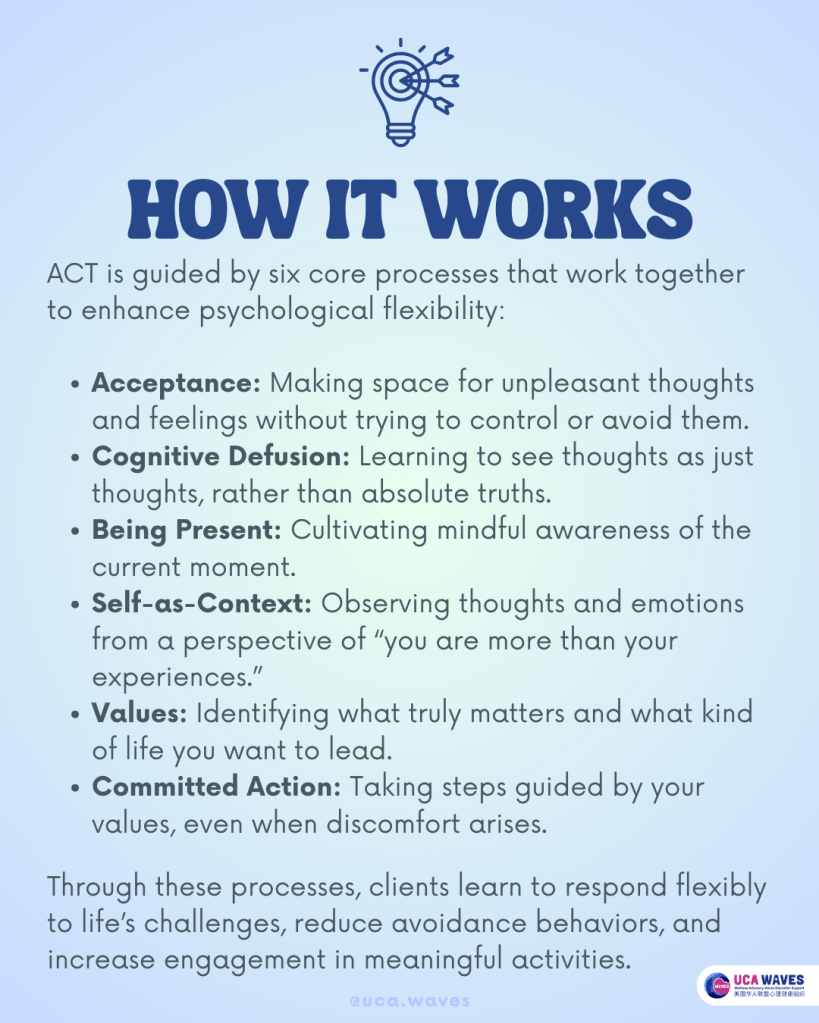
How ACT Works
ACT is guided by six core processes that work together to enhance psychological flexibility
- Acceptance: Making space for unpleasant thoughts and feelings without trying to control or avoid them.
- Cognitive Defusion: Learning to see thoughts as just thoughts, rather than absolute truths.
- Being Present: Cultivating mindful awareness of the current moment.
- Self-as-Context: Observing thoughts and emotions from a perspective of “you are more than your experiences.”
- Values: Identifying what truly matters and what kind of life you want to lead.
- Committed Action: Taking steps guided by your values, even when discomfort arises.
Through these processes, clients learn to respond flexibly to life’s challenges, reduce avoidance behaviors, and increase engagement in meaningful activities.
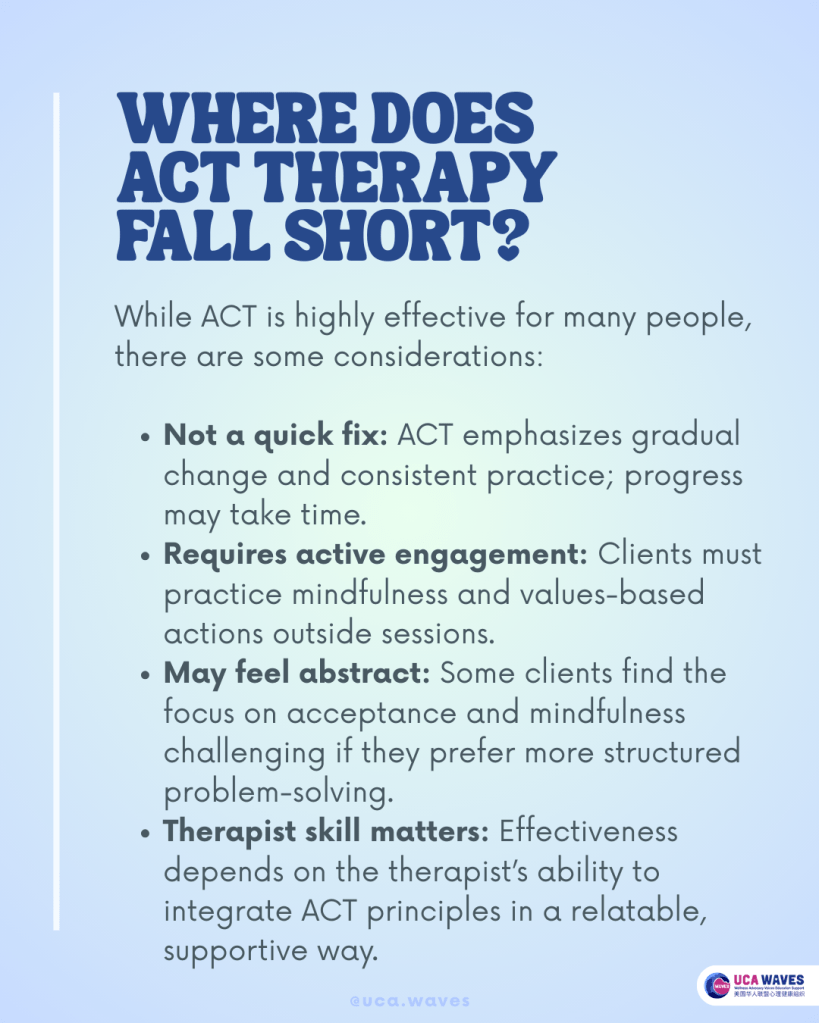
Where Does ACT Fall Short?
While ACT is highly effective for many people, there are some considerations:
- Not a quick fix: ACT emphasizes gradual change and consistent practice; progress may take time.
- Requires active engagement: Clients must practice mindfulness and values-based actions outside sessions.
- May feel abstract: Some clients find the focus on acceptance and mindfulness challenging if they prefer more structured problem-solving.
- Therapist skill matters: Effectiveness depends on the therapist’s ability to integrate ACT principles in a relatable, supportive way.
ACT offers a unique path to growth by embracing life’s challenges rather than resisting them, helping clients live with purpose and resilience.Want to learn more about Acceptance and Commitment Therapy or find a certified ACT therapist? Click on the button below!




Leave a comment