
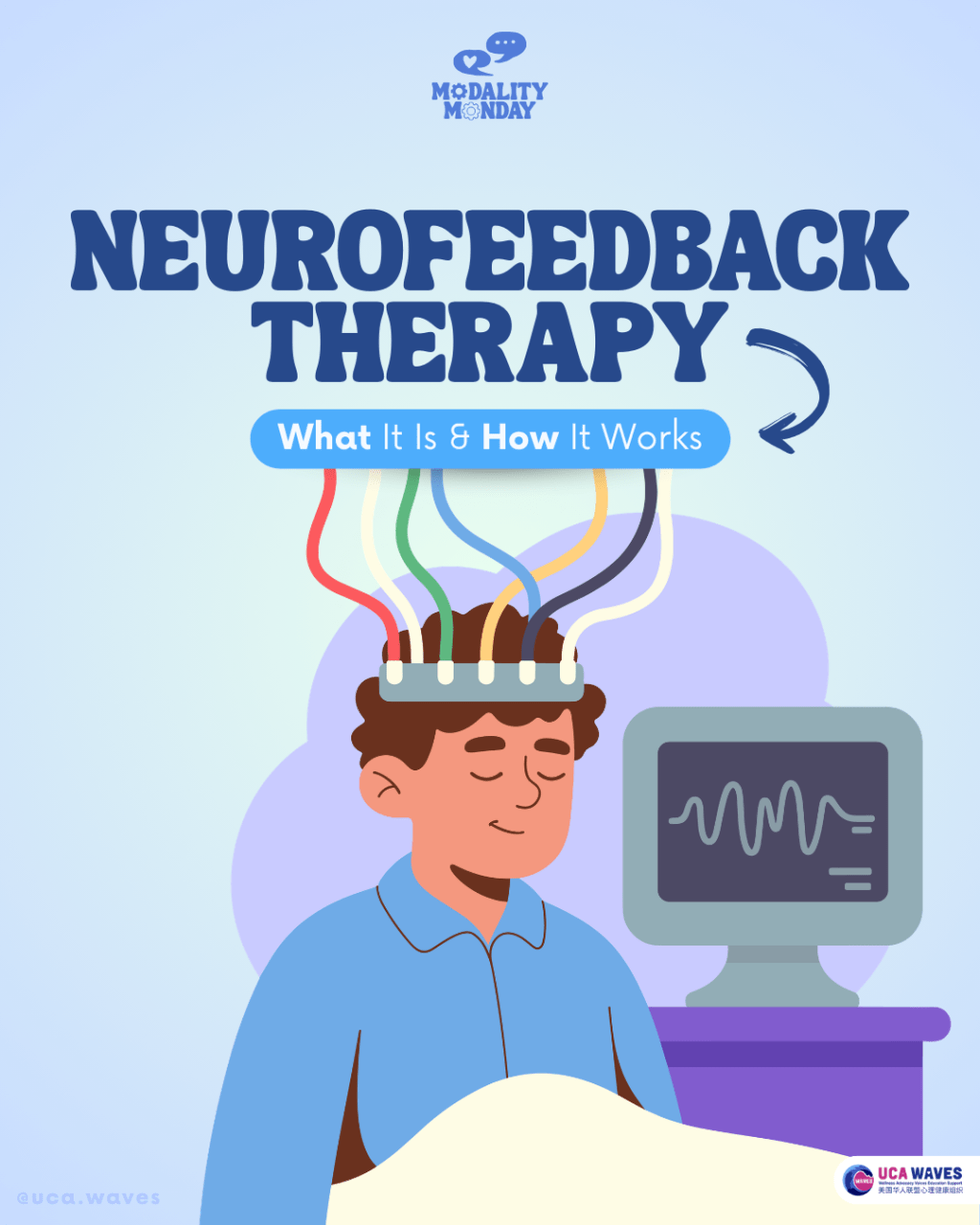
Understanding Neurofeedback: Using Brainwaves to Bounce Back
Another Monday, another post exploring different therapeutic modalities! Today, we’re exploring Neurofeedback, a brain-based approach that helps individuals learn to regulate their brain activity for improved mental and emotional well-being.
What is Neurofeedback?
Neurofeedback is a form of biofeedback that uses real-time monitoring of brain activity to help individuals train their brains to function more efficiently. Using sensors placed on the scalp, clinicians measure brainwave activity through electroencephalography (EEG). The information is then displayed through visual or auditory feedback, allowing the brain to learn how to shift toward healthier patterns.
Neurofeedback is often used to support individuals experiencing anxiety, ADHD, PTSD, depression, sleep difficulties, and stress-related challenges. Instead of focusing only on thoughts or behaviors, neurofeedback works directly with the brain’s electrical activity, helping it learn to self-regulate. Over time, the brain can become more flexible and balanced, which may lead to improvements in focus, emotional regulation, and overall functioning.
How Neurofeedback Works
During a neurofeedback session, sensors are placed on the scalp to measure brainwave activity. The client then engages with a computer program—often watching a movie, playing a game, or viewing visual animations—that responds to their brain activity in real time.
When the brain produces healthier patterns, the program provides positive feedback (such as the movie continuing or the animation progressing). When brain activity moves away from the desired pattern, the feedback pauses. This process helps the brain gradually learn and reinforce more balanced activity patterns.
Over repeated sessions, the brain can begin to self-correct and maintain healthier patterns outside of training sessions. The goal is improved self regulation, which can support emotional stability, attention, sleep, and resilience to stress.
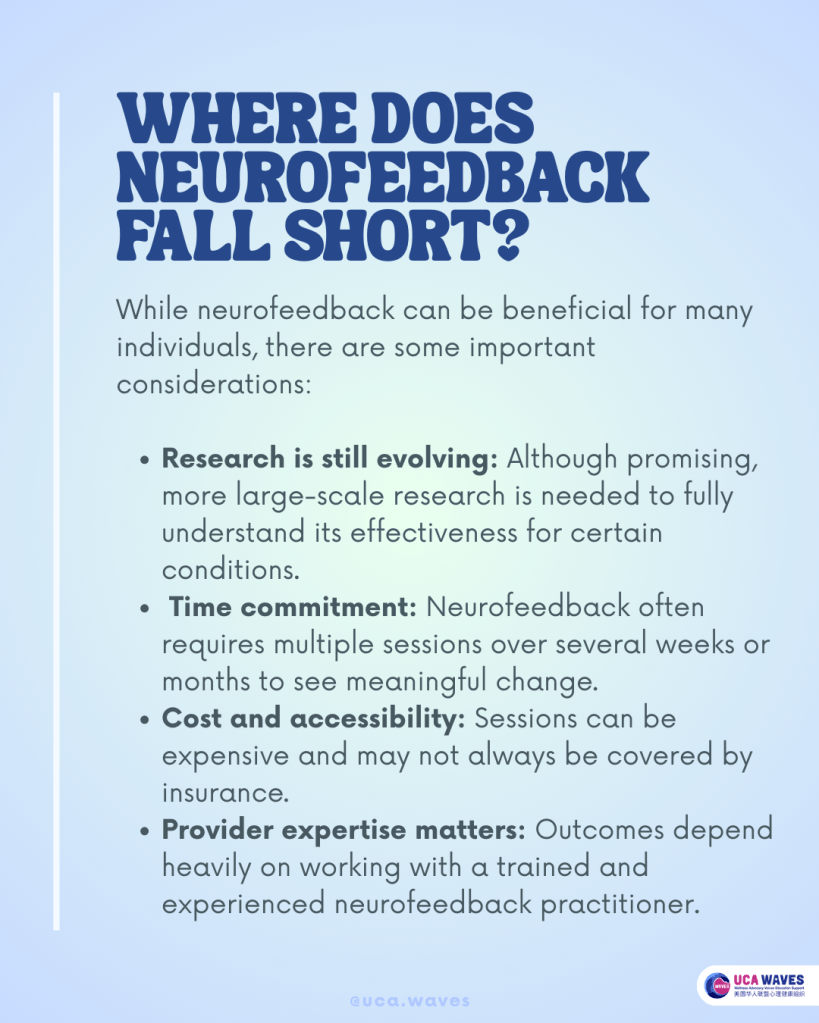
Where Does ACT Fall Short?
While neurofeedback can be beneficial for many individuals, there are some important considerations:
- Research is still evolving: Although promising, more large-scale research is needed to fully understand its effectiveness for certain conditions.
- Time commitment: Neurofeedback often requires multiple sessions over several weeks or months to see meaningful change.
- Cost and accessibility: Sessions can be expensive and may not always be covered by insurance.
- Provider expertise matters: Outcomes depend heavily on working with a trained and experienced neurofeedback practitioner.
Neurofeedback offers an innovative way to support the brain’s natural ability to change and adapt, helping individuals develop stronger regulation and resilience over time. Interested in learning more about neurofeedback or finding a qualified provider? Check out this overview by Psychology Today by clicking on the button below!

 UCA WAVES
Leave a comment