
Understanding Eating Disorders in AAPI Communities
It’s National Eating Disorder Awareness (NEDA) Week, and today we wanted to highlight something that often goes unseen: eating disorders in the AAPI community. Here’s 5 fast facts you want to know:
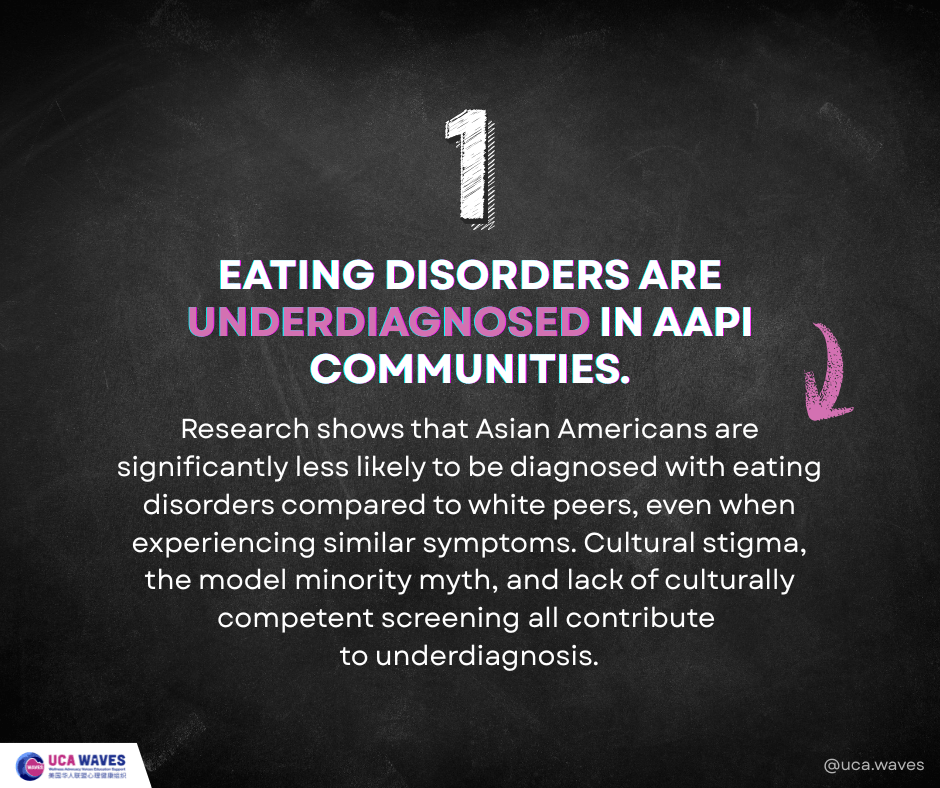
1️⃣ Eating disorders are underdiagnosed in AAPI communities.
Research shows that Asian Americans are significantly less likely to be diagnosed with eating disorders compared to white peers, even when experiencing similar symptoms. Cultural stigma, the model minority myth, and lack of culturally competent screening all contribute to underdiagnosis.
🔗 https://www.nationaleatingdisorders.org/aapi-and-eating-disorders/
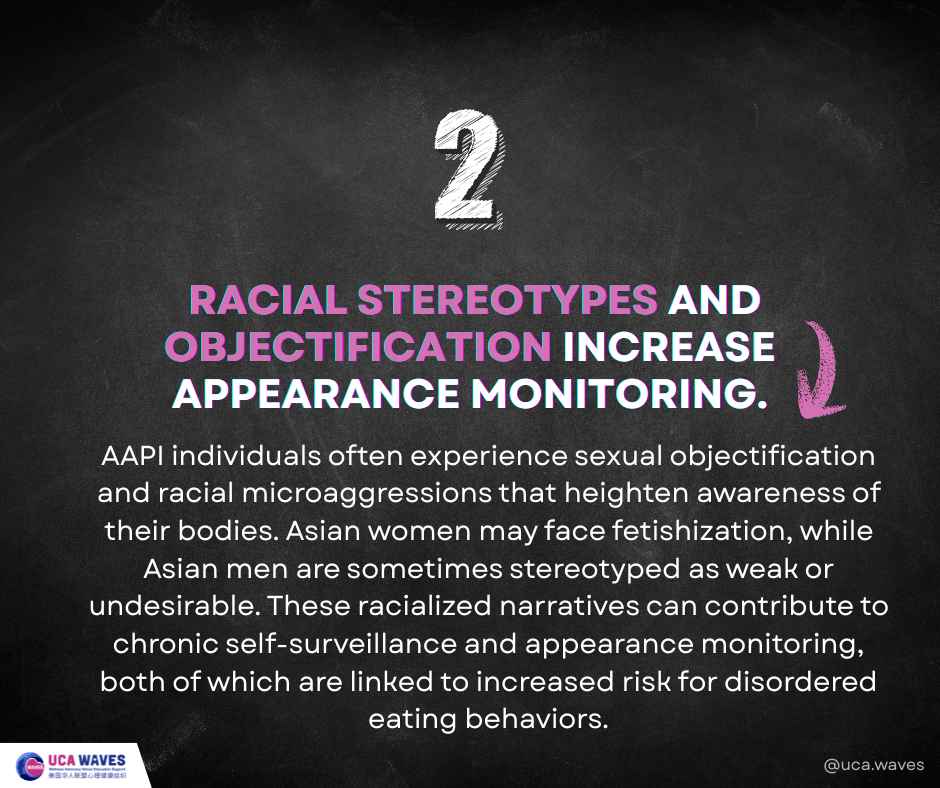
2️⃣ Racial stereotypes and objectification increase appearance monitoring.
AAPI individuals often experience sexual objectification and racial microaggressions that heighten awareness of their bodies. Asian women may face fetishization, while Asian men are sometimes stereotyped as weak or undesirable. These racialized narratives can contribute to chronic self-surveillance and appearance monitoring, both of which are linked to increased risk for disordered eating behaviors.
🔗 https://www.nationaleatingdisorders.org/aapi-and-eating-disorders/
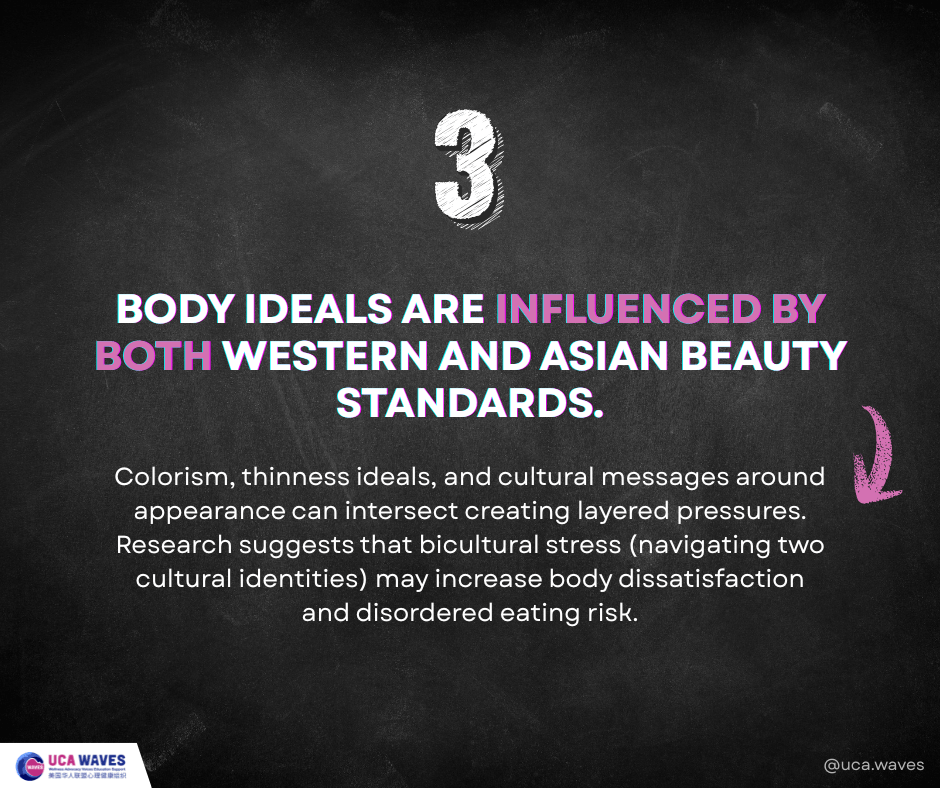
3️⃣ Body ideals are influenced by both Western and Asian beauty standards.
Colorism, thinness ideals, and cultural messages around appearance can intersect creating layered pressures. Research suggests that bicultural stress (navigating two cultural identities) may increase body dissatisfaction and disordered eating risk.
🔗https://www.nationaleatingdisorders.org/aapi-and-eating-disorders/
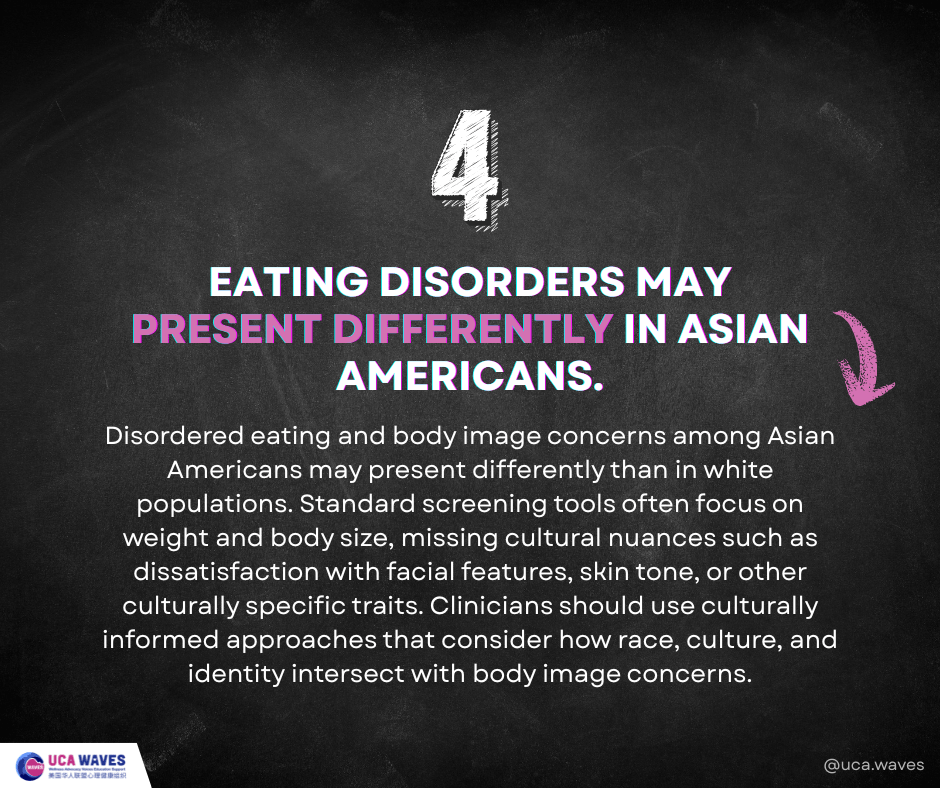
4️⃣ Eating disorders may present differently in Asian Americans.
Disordered eating and body image concerns among Asian Americans may present differently than in white populations. Standard screening tools often focus on weight and body size, missing cultural nuances such as dissatisfaction with facial features, skin tone, or other culturally specific traits. Clinicians should use culturally informed approaches that consider how race, culture, and identity intersect with body image concerns.
🔗 https://www.montenido.com/blog/asian-american-eating-disorder-influences
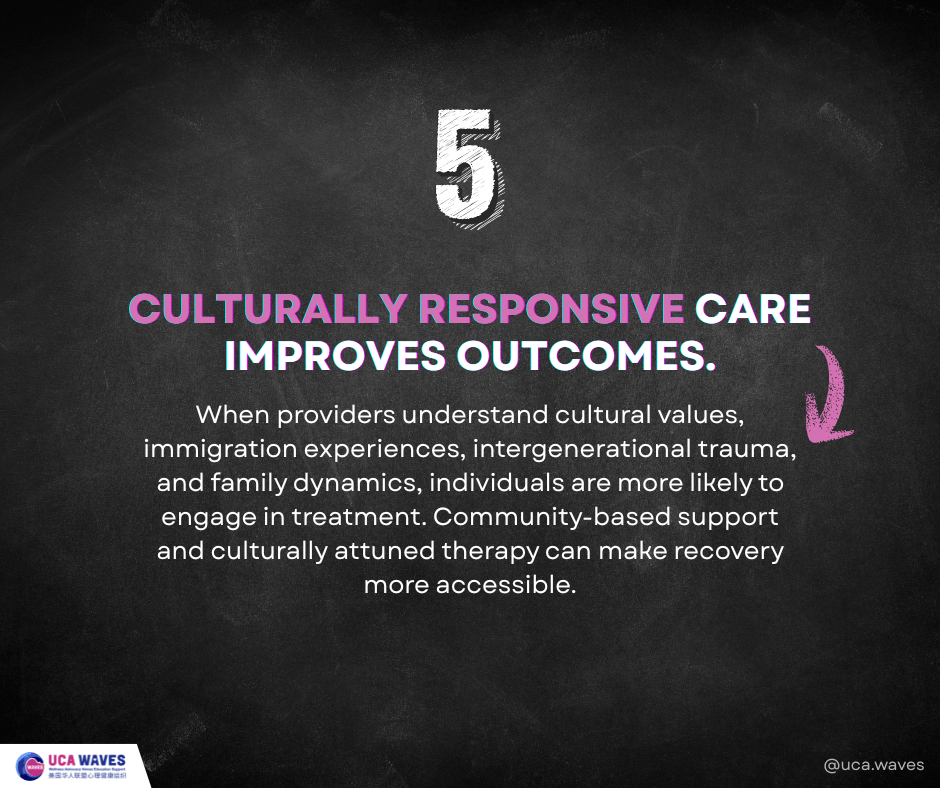
5️⃣ Culturally responsive care improves outcomes.
When providers understand cultural values, immigration experiences, intergenerational trauma, and family dynamics, individuals are more likely to engage in treatment. Community-based support and culturally attuned therapy can make recovery more accessible.
If you’re part of the AAPI community and struggling with food, body image, or shame—you are not alone. Your experience is real, valid, and worthy of care. WAVES stands with you this NEDA Week. Healing is possible, and you deserve support that sees your whole story💜
 UCA WAVES
Leave a comment