

Understanding Talk Therapy: The Power of a Safe Space
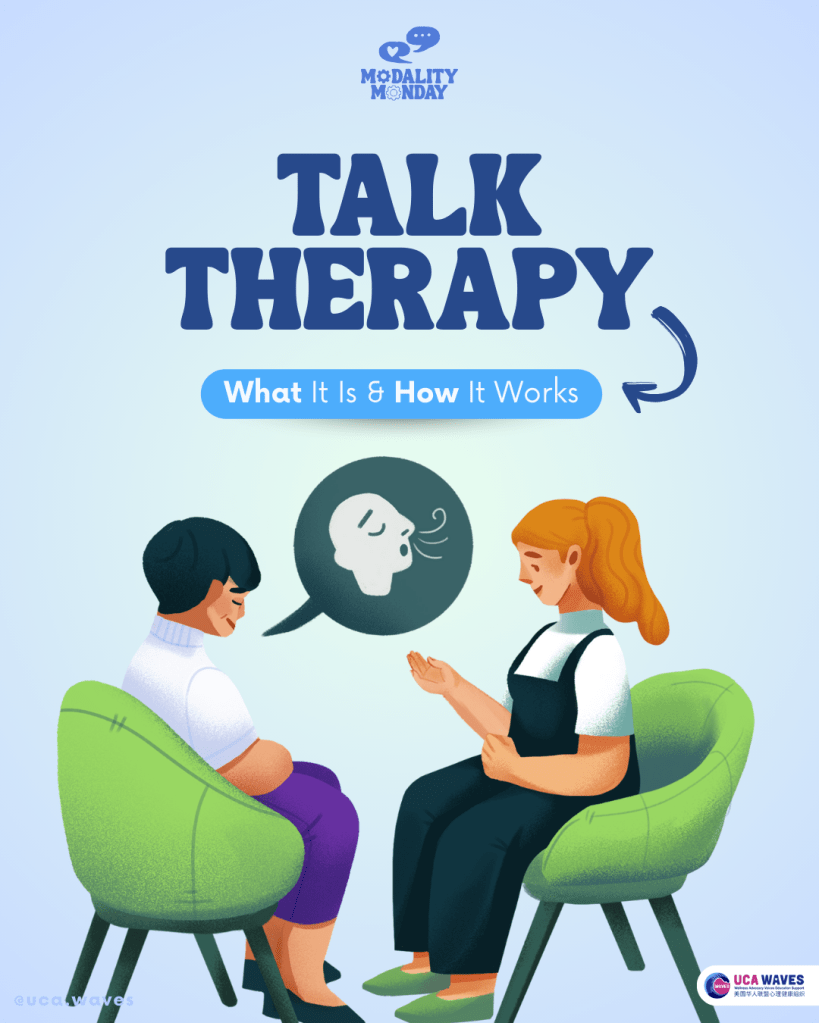
It’s been a minute, but we’re back with another edition of Modality Monday! Today, we’re exploring one you’ve likely all heard of: Talk Therapy, a modality that has supported healing, growth, and self-understanding for over a century.
What is Talk Therapy?
Talk Therapy—also known as psychotherapy—is a therapeutic approach where individuals work with a trained mental health professional to explore their thoughts, emotions, behaviors, and patterns. It creates a safe, supportive space to understand what’s going on internally and develop healthier ways of coping and relating to the world.
Unlike body-based or brain-based approaches, Talk Therapy is considered a top-down modality. This means it works through conscious reflection, language, and insight to create change. For many people, simply having a nonjudgmental space to process life experiences, trauma, stress, relationships, or identity can be profoundly healing.
How Talk Therapy Works
During Talk Therapy, you and your therapist engage in open dialogue to explore what you’re experiencing internally and externally. Together, you work toward greater clarity, emotional resilience, and personal growth. Key elements often include:
- Insight building: Understanding the roots of emotions, patterns, and behaviors.
- Emotional processing: Naming and expressing emotions in a safe, guided environment.
- Cognitive reflection: Examining beliefs, thoughts, or narratives that may be holding you back.
- Relationship-focused support: Using the therapeutic relationship as a model for trust, boundaries, and communication.
- Skill development: Depending on the modality, therapy may include tools for grounding, coping, communication, or reframing patterns.
Where does Talk Therapy fall short?
While Talk Therapy is incredibly valuable, it’s not without limitations:
- May not address stored trauma in the body: For some people—especially those with complex trauma—talk alone may not reach the deeper nervous system responses driving symptoms.
- Can take time: Talk Therapy often builds insight gradually, which may feel slow for clients seeking quick, structured changes.
- Not always enough on its own: Some individuals may benefit from pairing it with somatic, brain-based, or skills-focused therapies.
- Requires strong therapeutic fit: The quality of the relationship with the therapist often determines effectiveness. A mismatch can limit progress.
Despite these considerations, Talk Therapy remains one of the most trusted and widely used modalities for healing depression, anxiety, trauma, relationship challenges, grief, and personal growth. For many, it’s the foundation of their mental health journey.
Want to learn more about Talk Therapy? Click on the buton below⬇️


 UCA WAVES
Leave a comment