

Understanding Brainspotting: A Trauma-Informed Approach to Healing
We’re back with the fifth edition of Modality Monday! Today, we’re exploring Brainspotting, a powerful, brain-based therapy that’s gaining recognition for its effectiveness in healing trauma and emotional distress.
What is Brainspotting?
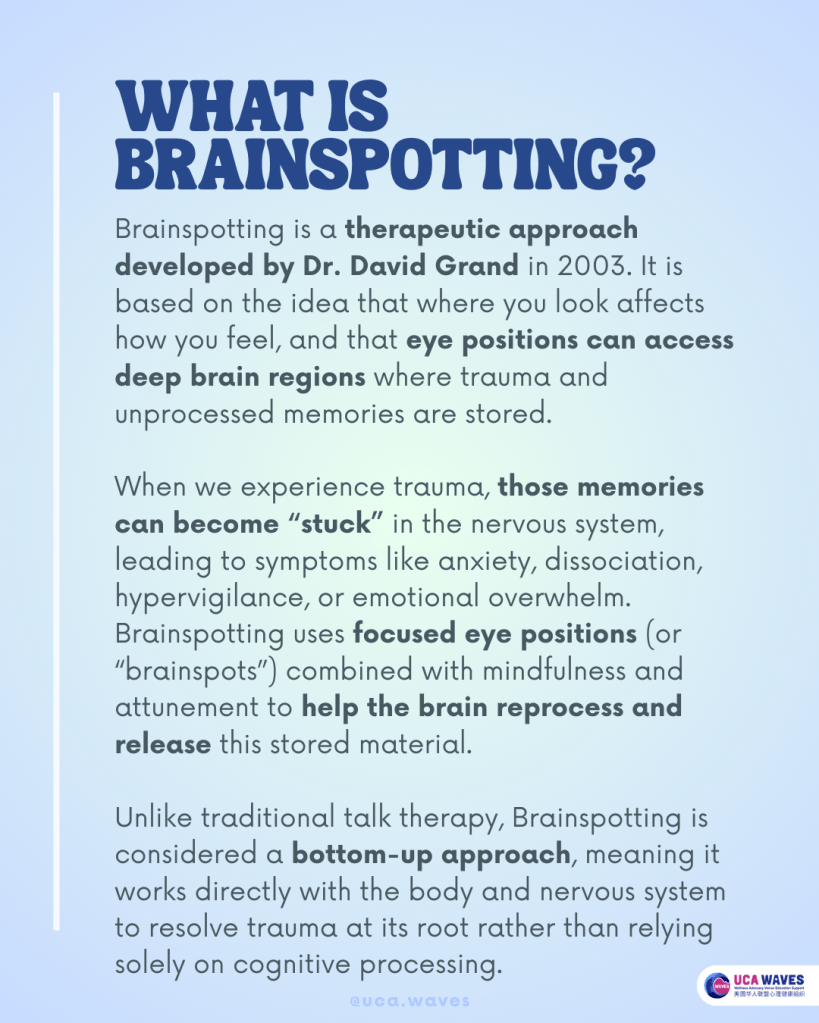
Brainspotting is a therapeutic approach developed by Dr. David Grand in 2003. It is based on the idea that where you look affects how you feel, and that eye positions can access deep brain regions where trauma and unprocessed memories are stored.
When we experience trauma, those memories can become “stuck” in the nervous system, leading to symptoms like anxiety, dissociation, hypervigilance, or emotional overwhelm. Brainspotting uses focused eye positions (or “brainspots”) combined with mindfulness and attunement to help the brain reprocess and release this stored material.
Unlike traditional talk therapy, Brainspotting is considered a bottom-up approach, meaning it works directly with the body and nervous system to resolve trauma at its root rather than relying solely on cognitive processing.
How Brainspotting Works
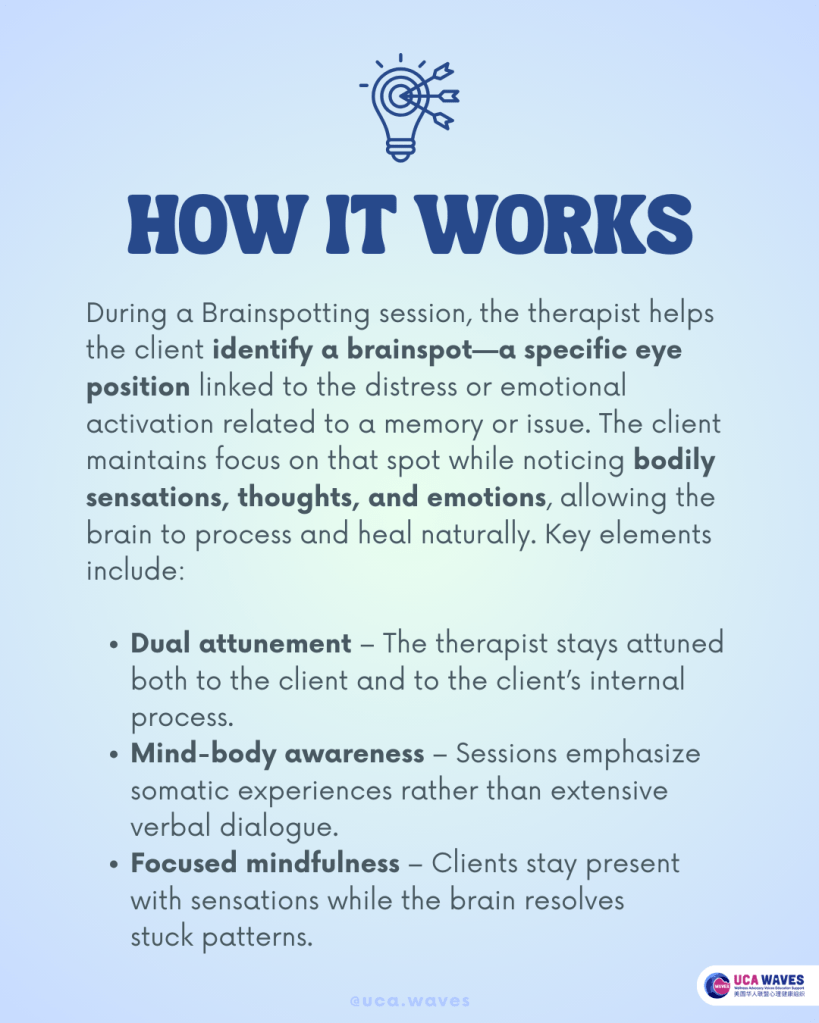
During a Brainspotting session, the therapist helps the client identify a brainspot—a specific eye position linked to the distress or emotional activation related to a memory or issue. The client maintains focus on that spot while noticing bodily sensations, thoughts, and emotions, allowing the brain to process and heal naturally
Key elements include:
- Dual attunement – The therapist stays attuned both to the client and to the client’s internal process.
- Mind-body awareness – Sessions emphasize somatic experiences rather than extensive verbal dialogue.
- Focused mindfulness – Clients stay present with sensations while the brain resolves stuck patterns.
Where does Brainspotting fall short?
While Brainspotting can be transformative, there are some important consideration
- Limited research base: Although early studies and clinical reports are promising, Brainspotting doesn’t yet have the extensive research support that therapies like CBT or EMDR do.
- Requires specialized training: Not all therapists are trained in Brainspotting, and availability can be limited.
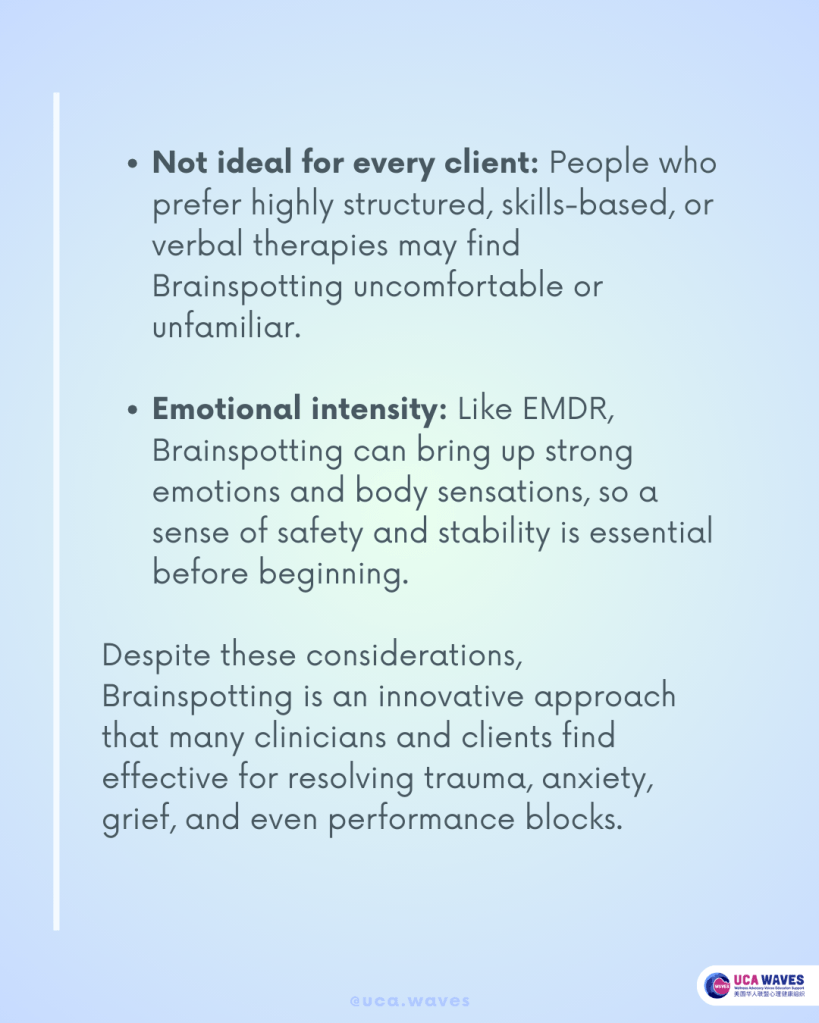
- Not ideal for every client: People who prefer highly structured, skills-based, or verbal therapies may find Brainspotting uncomfortable or unfamiliar.
- Emotional intensity: Like EMDR, Brainspotting can bring up strong emotions and body sensations, so a sense of safety and stability is essential before beginning.
Despite these considerations, Brainspotting is an innovative approach that many clinicians and clients find effective for resolving trauma, anxiety, grief, and even performance blocks.
Want to learn more about Brainspotting or find a certified provider? Click on the button below!

 UCA WAVES
Leave a comment