

We’re kicking off the week with another edition of Modality Monday! Today, we’re exploring Internal Family Systems therapy, more commonly known as IFS.
What is IFS?
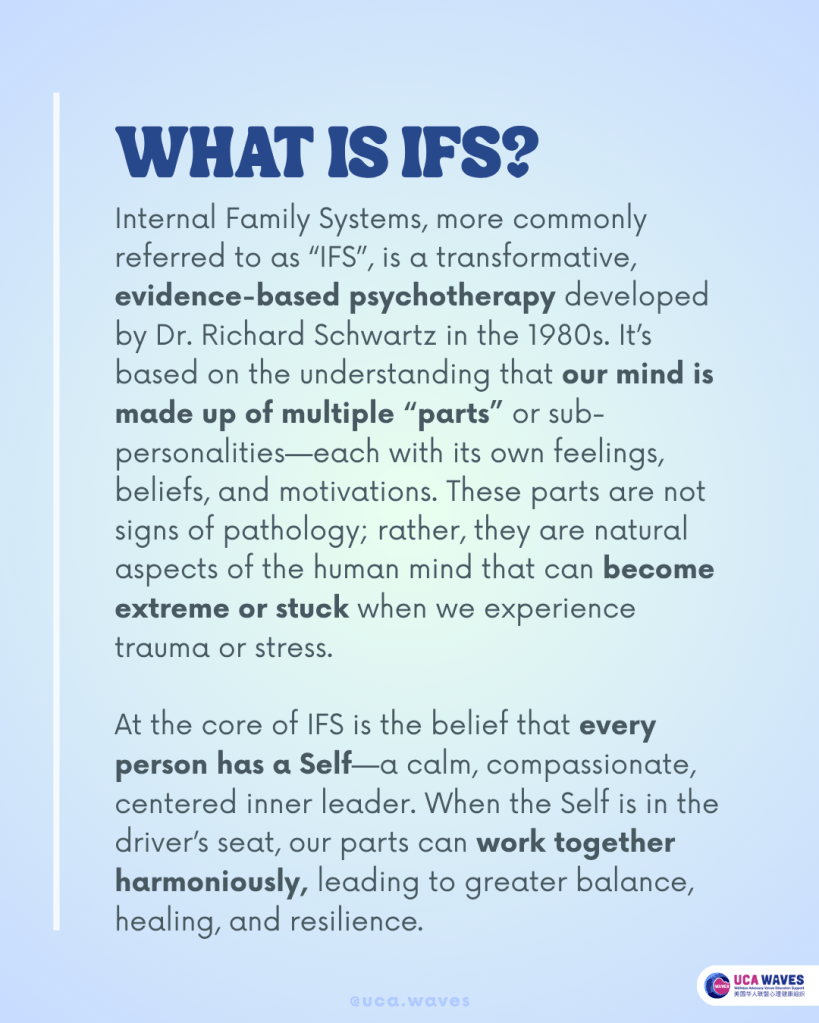
IFS is a transformative, evidence-based psychotherapy developed by Dr. Richard Schwartz in the 1980s. It’s based on the understanding that our mind is made up of multiple “parts” or sub-personalities—each with its own feelings, beliefs, and motivations. These parts are not signs of pathology; rather, they are natural aspects of the human mind that can become extreme or stuck when we experience trauma or stress.
At the core of IFS is the belief that every person has a Self—a calm, compassionate, centered inner leader. When the Self is in the driver’s seat, our parts can work together harmoniously, leading to greater balance, healing, and resilience.
How IFS Works
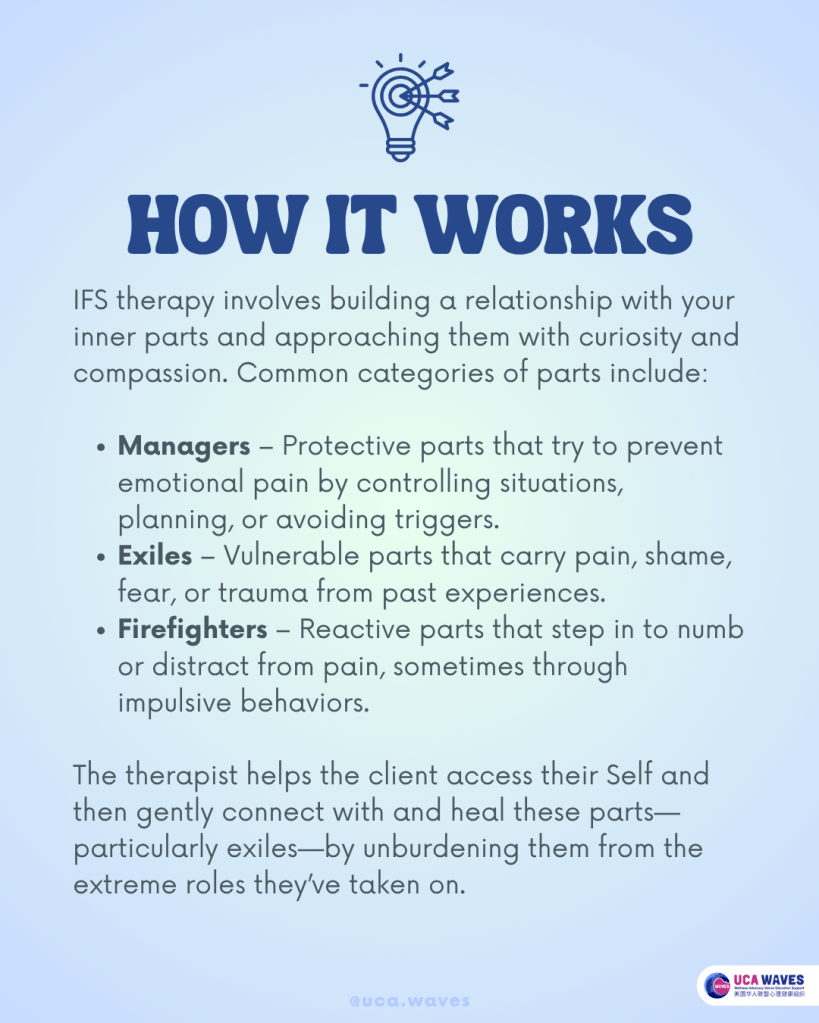
IFS therapy involves building a relationship with your inner parts and approaching them with curiosity and compassion. Common categories of parts include:
- Managers – Protective parts that try to prevent emotional pain by controlling situations, planning, or avoiding triggers.
- Exiles – Vulnerable parts that carry pain, shame, fear, or trauma from past experiences.
- Firefighters – Reactive parts that step in to numb or distract from pain, sometimes through impulsive behaviors.
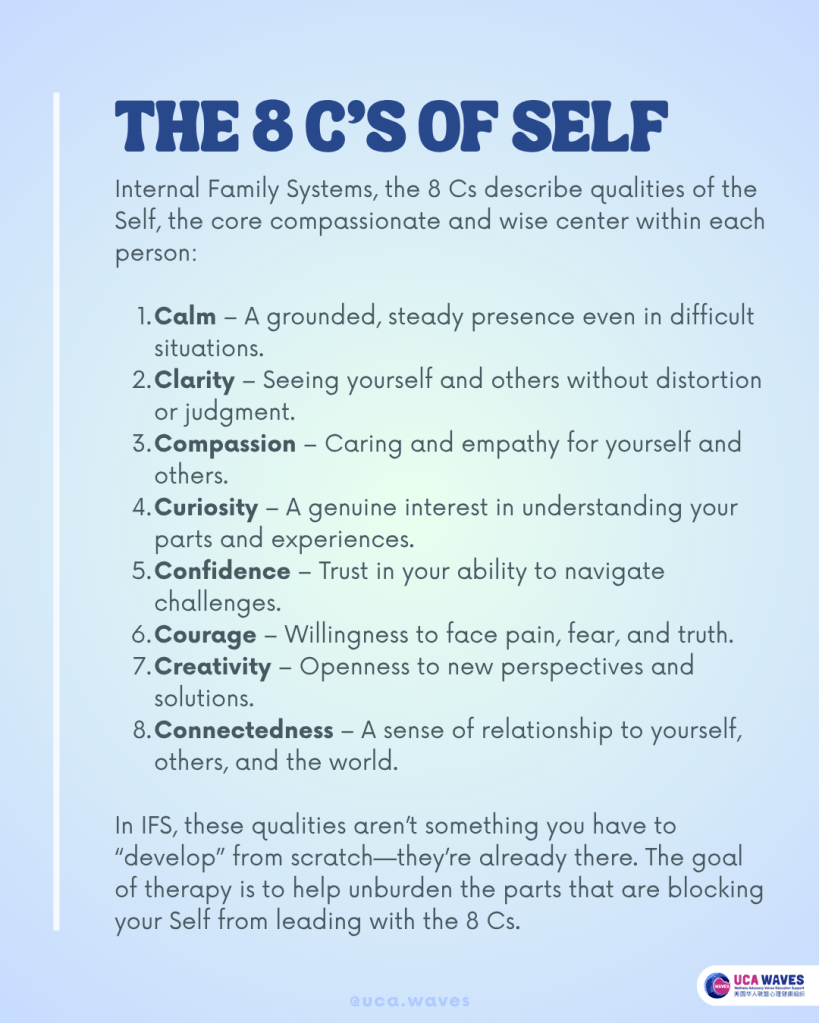
The therapist helps the client access their Self and then gently connect with and heal these parts—particularly exiles—by unburdening them from the extreme roles they’ve taken on.The goal of therapy is to help unburden the parts that are blocking your Self from leading with the 8 Cs. The Self consists of 8 C’s: calm, clarity, compassion, curiosity, confidence, courage, creativity and connectedness. In IFS, these qualities aren’t something you have to “develop” from scratch—they’re already there!
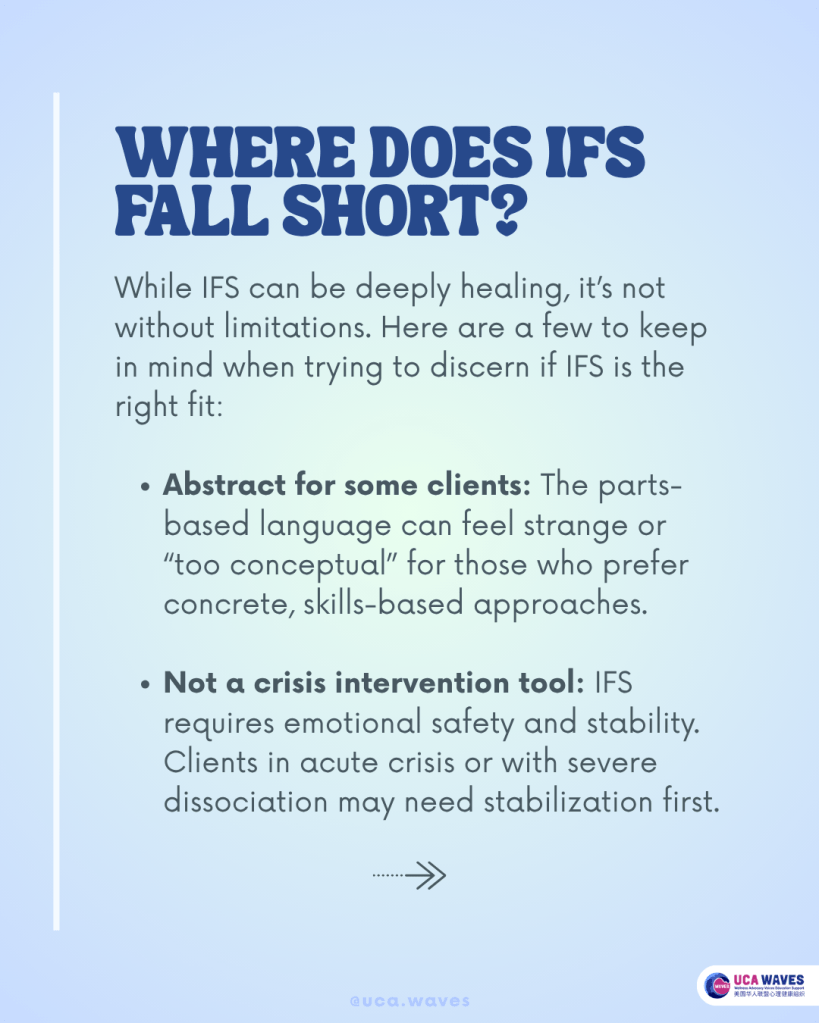
Where does IFS fall short?
While IFS can be deeply healing, it’s not without limitations. Here are a few to keep in mind when trying to discern if IFS is the right fit:
- Abstract for some clients: The parts-based language can feel strange or “too conceptual” for those who prefer concrete, skills-based approaches.
- Not a crisis intervention tool: IFS requires emotional safety and stability. Clients in acute crisis or with severe dissociation may need stabilization first.
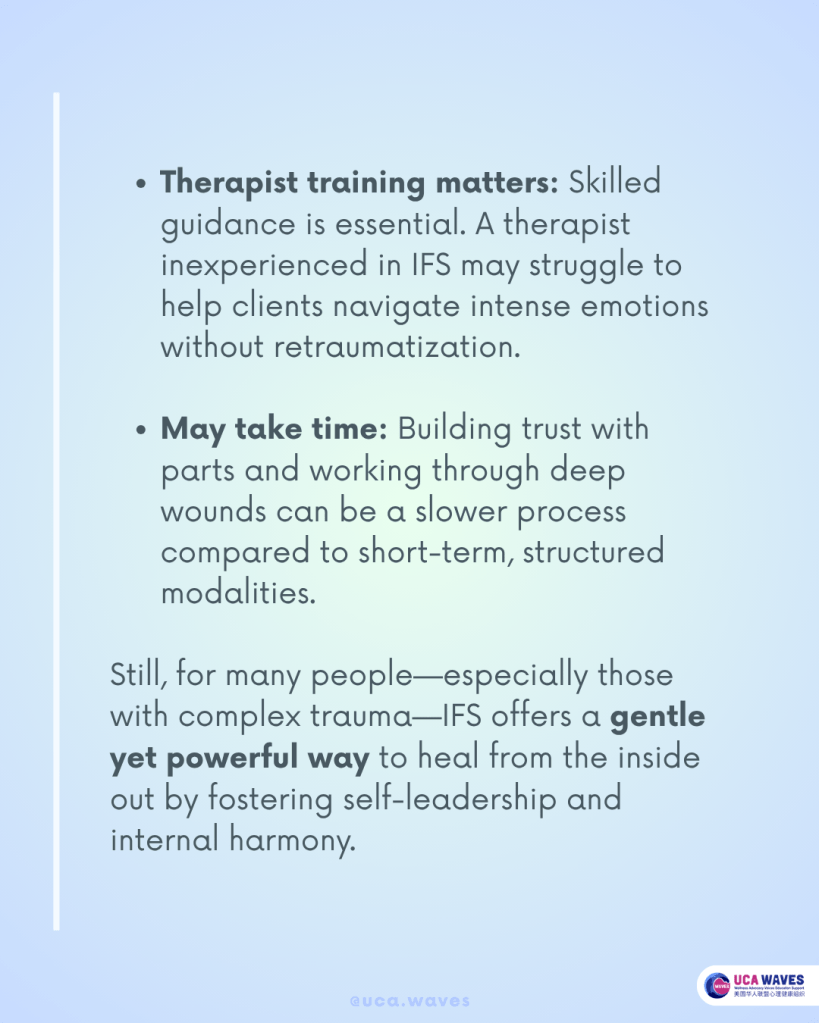
- Therapist training matters: Skilled guidance is essential. A therapist inexperienced in IFS may struggle to help clients navigate intense emotions without retraumatization.
- May take time: Building trust with parts and working through deep wounds can be a slower process compared to short-term, structured modalities.
Still, for many people—especially those with complex trauma—IFS offers a gentle yet powerful way to heal from the inside out by fostering self-leadership and internal harmony.

 UCA WAVES
Leave a comment