
We’re kicking off the week with the third edition of Modality Monday! Today, we’re diving into Dialectical Behavior Therapy, more commonly referred to as DBT. Let’s get into it.
What is DBT?
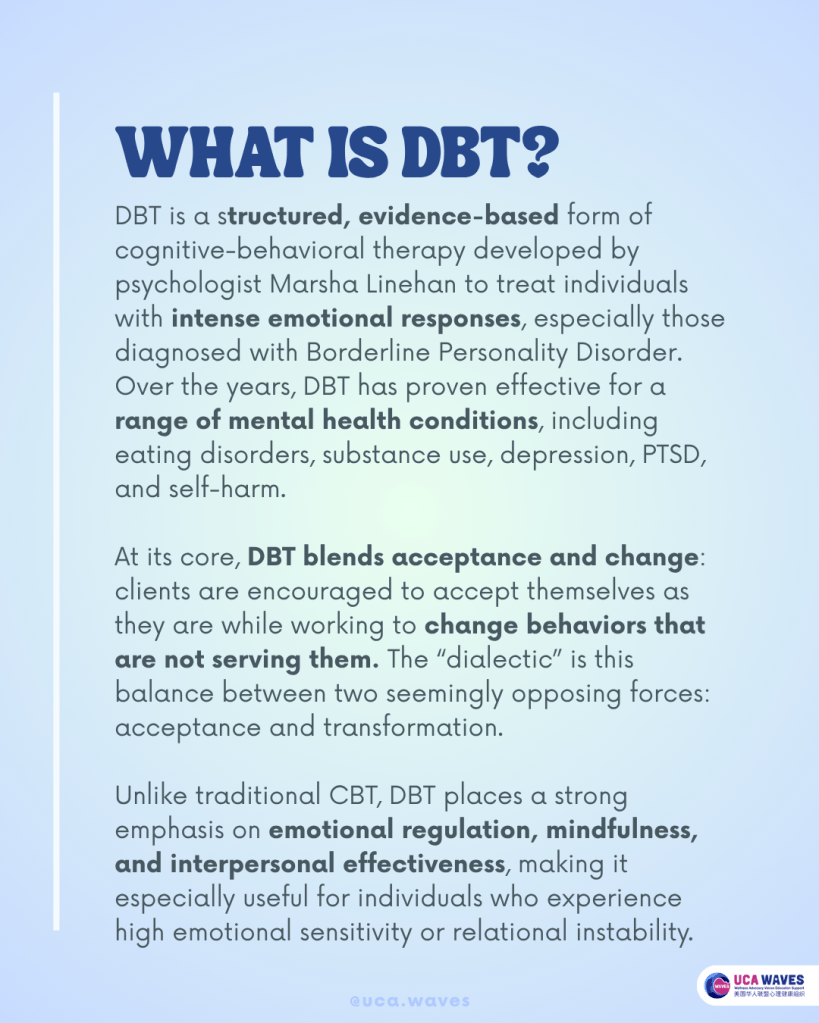
DBT is a structured, evidence-based form of cognitive-behavioral therapy developed by psychologist Marsha Linehan to treat individuals with intense emotional responses, especially those diagnosed with Borderline Personality Disorder. Over the years, DBT has proven effective for a range of mental health conditions, including eating disorders, substance use, depression, PTSD, and self-harm.
At its core, DBT blends acceptance and change: clients are encouraged to accept themselves as they are while working to change behaviors that are not serving them. The “dialectic” is this balance between two seemingly opposing forces: acceptance and transformation.
Unlike traditional CBT, DBT places a strong emphasis on emotional regulation, mindfulness, and interpersonal effectiveness, making it especially useful for individuals who experience high emotional sensitivity or relational instability.
How DBT Works
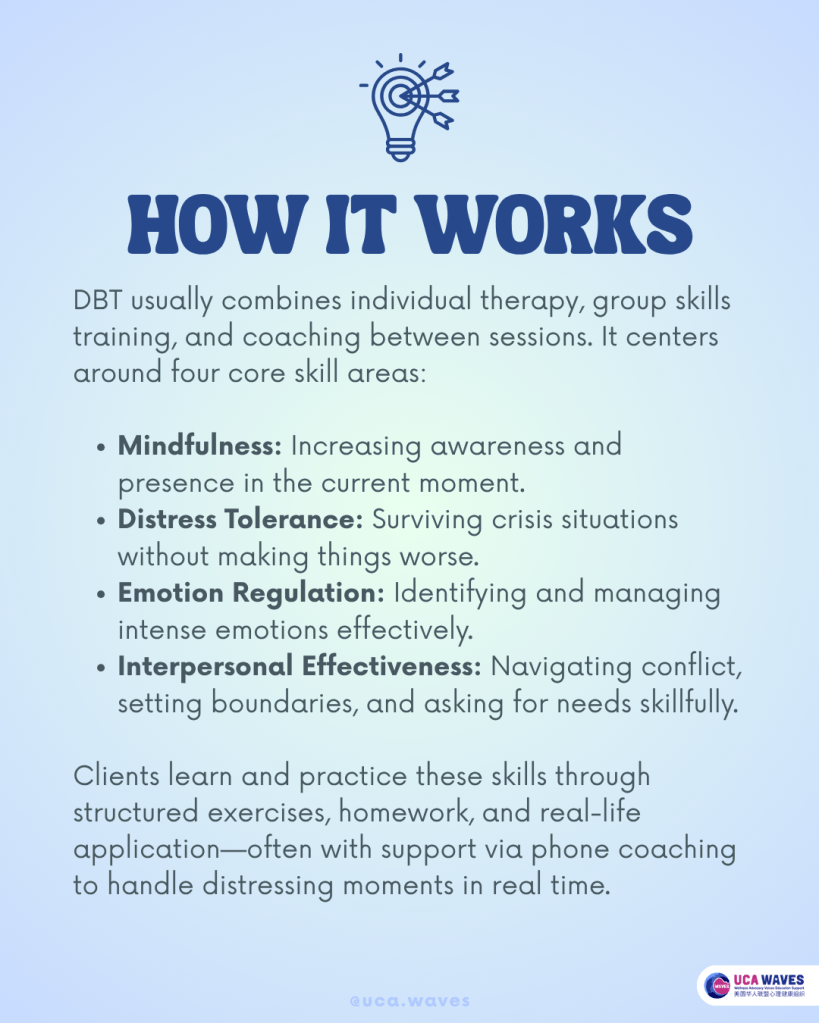
DBT usually combines individual therapy, group skills training, and coaching between sessions. It centers around four core skill areas:
- Mindfulness: Increasing awareness and presence in the current moment.
- Distress Tolerance: Surviving crisis situations without making things worse.
- Emotion Regulation: Identifying and managing intense emotions effectively.
- Interpersonal Effectiveness: Navigating conflict, setting boundaries, and asking for needs skillfully.
Clients learn and practice these skills through structured exercises, homework, and real-life application—often with support via phone coaching to handle distressing moments in real time.
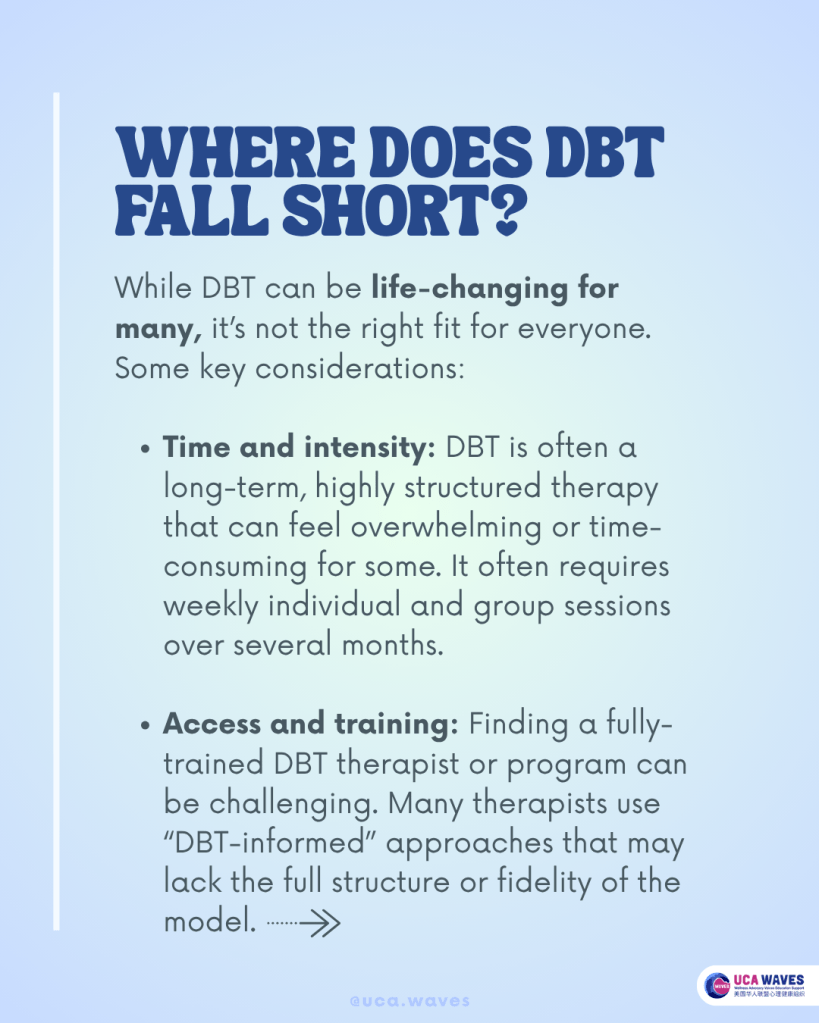
Where does DBT fall short?
While DBT can be life-changing for many, it’s not the right fit for everyone. Some key considerations:
- Time and intensity: DBT is often a long-term, highly structured therapy that can feel overwhelming or time-consuming for some. It often requires weekly individual and group sessions over several months.
- Access and training: Finding a fully-trained DBT therapist or program can be challenging. Many therapists use “DBT-informed” approaches that may lack the full structure or fidelity of the model.
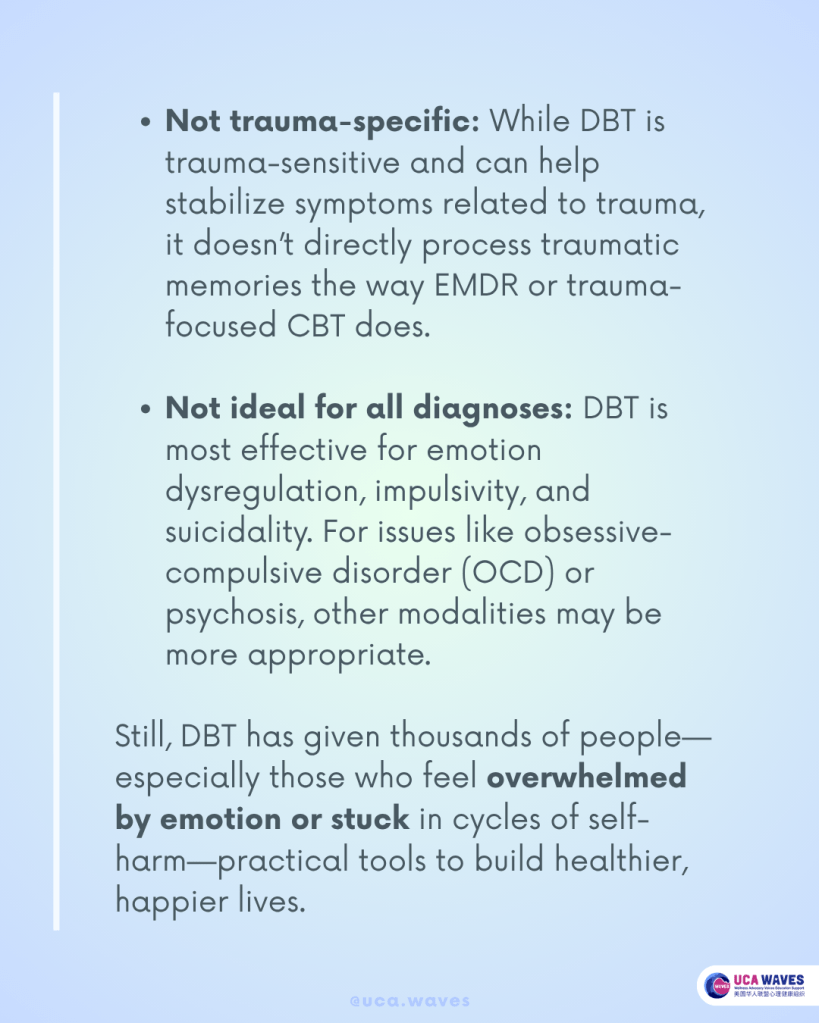
- Not trauma-specific: While DBT is trauma-sensitive and can help stabilize symptoms related to trauma, it doesn’t directly process traumatic memories the way EMDR or trauma-focused CBT does.
- Not ideal for all diagnoses: DBT is most effective for emotion dysregulation, impulsivity, and suicidality. For issues like obsessive-compulsive disorder (OCD) or psychosis, other modalities may be more appropriate.
Still, DBT has given thousands of people—especially those who feel overwhelmed by emotion or stuck in cycles of self-harm—practical tools to build healthier, happier lives.
Want to learn more about DBT or find a DBT-trained provider? Click on the button below!
 UCA WAVES
Leave a comment