
To Say or Not to Say
Last Wellness Wednesday, we looked at the benefits of reading…but what about the words we tell ourselves? You’ve probably heard of #affirmations: short, positive statements meant to rewire our thinking. But do they really do anything? Science says yes, with some important caveats. Let’s dive in!
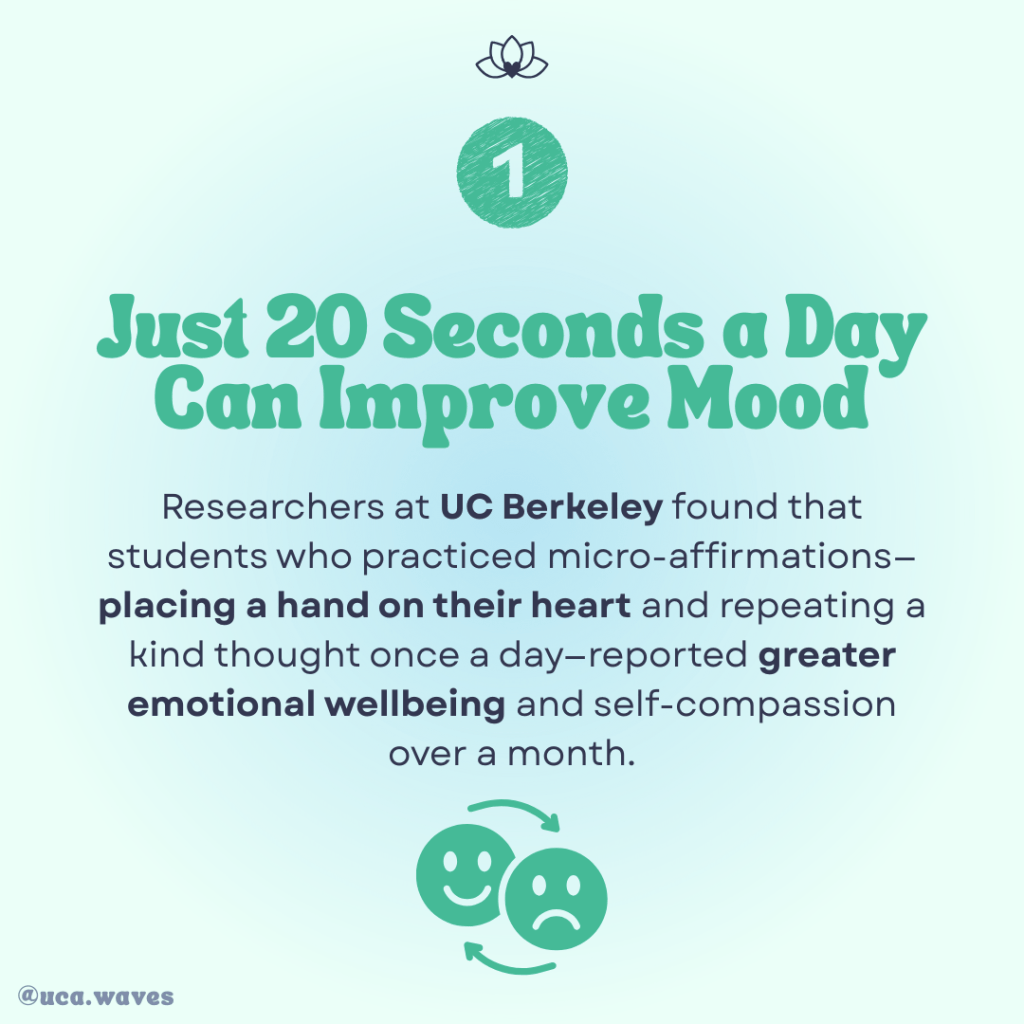
✅ Just 20 Seconds a Day Can Improve Mood
Researchers at UC Berkeley found that students who practiced micro-affirmations—placing a hand on their heart and repeating a kind thought once a day—reported greater emotional well-being and self-compassion over a month.
✅ Affirmations Activate Reward Centers in the Brain
A study using fMRI showed that self-affirmation practices engage the ventromedial prefrontal cortex, a region tied to self-processing and valuation. This brain activity helps reinforce positive identity and resilience.
https://pmc.ncbi.nlm.nih.gov/articles/PMC4814782/
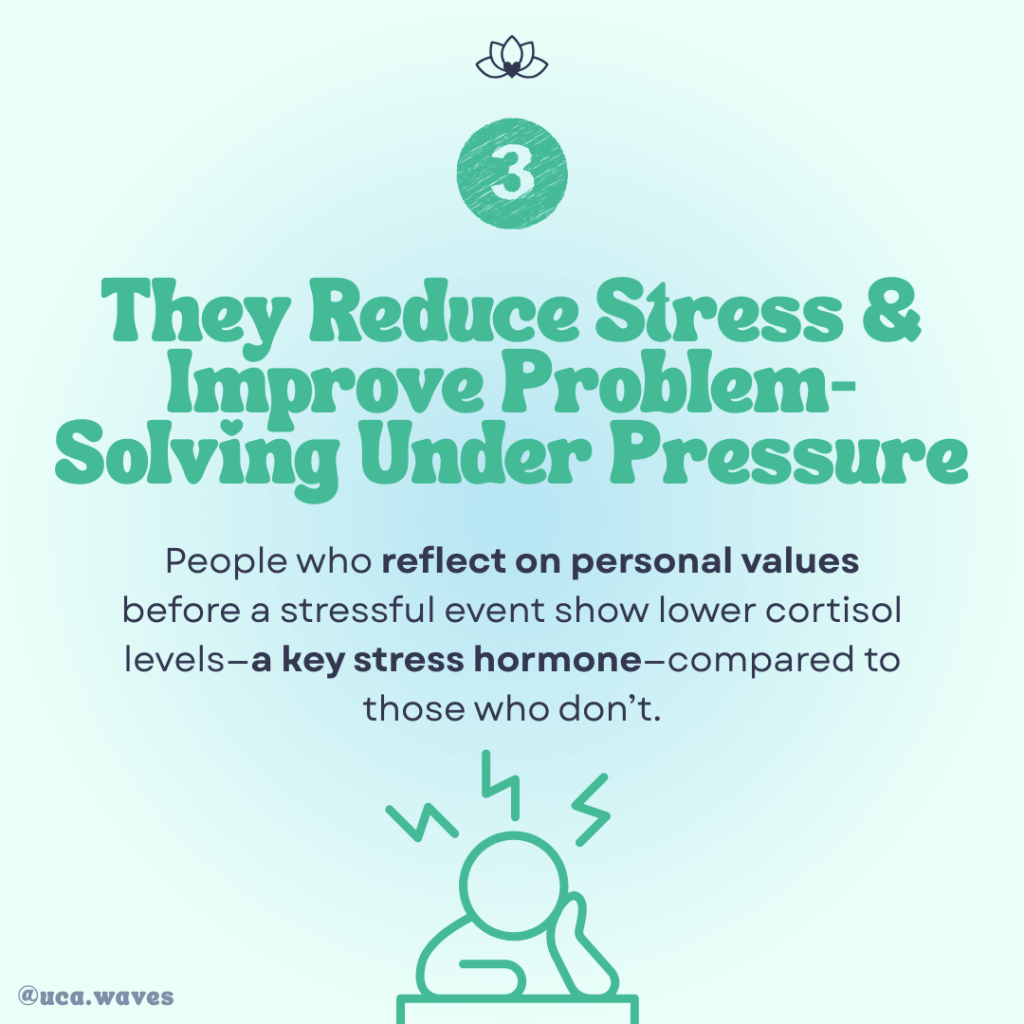
✅ They Reduce Stress & Improve Problem-Solving Under Pressure
People who reflect on personal values before a stressful event show lower cortisol levels—a key stress hormone—compared to those who don’t.
https://pubmed.ncbi.nlm.nih.gov/16262767/
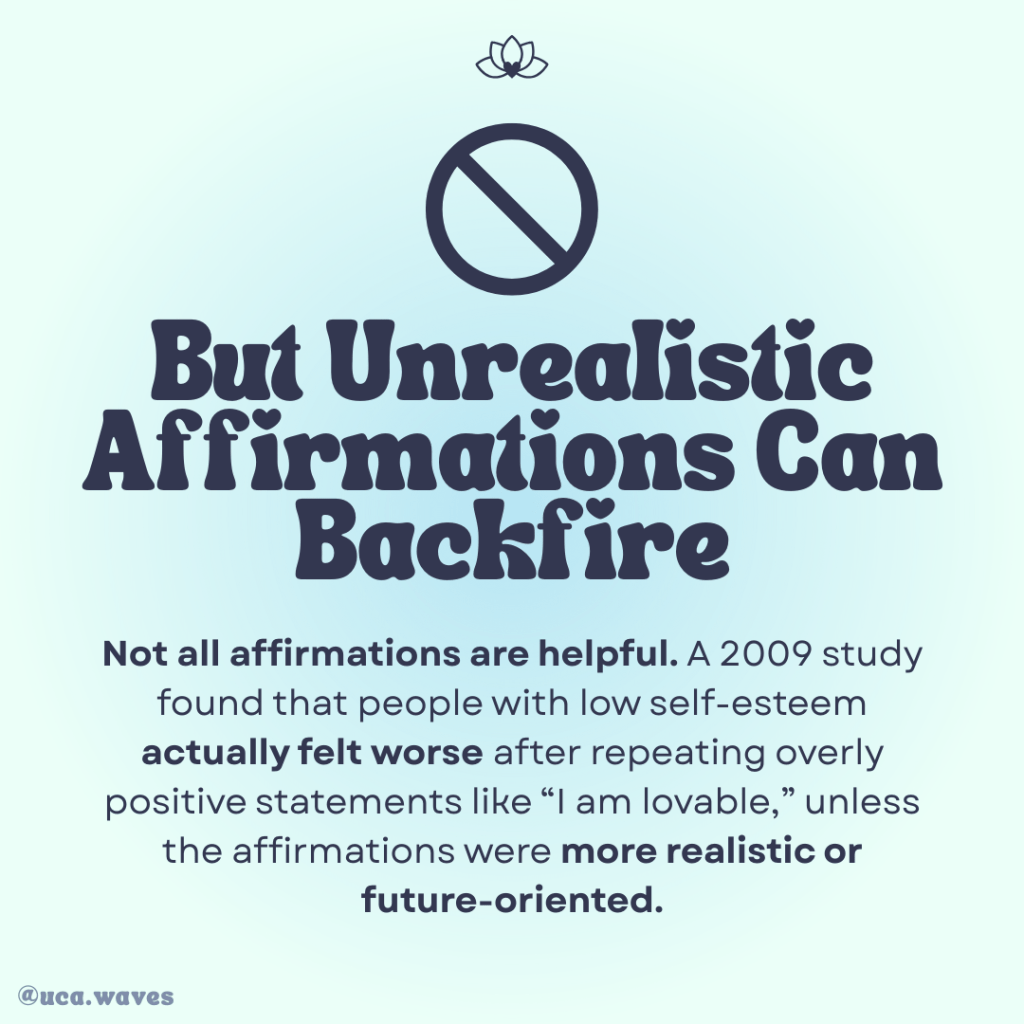
⚠️ But Unrealistic Affirmations Can Backfire ⚠️
Not all affirmations are helpful. A 2009 study found that people with low self-esteem actually felt worse after repeating overly positive statements like “I am lovable,” unless the affirmations were more realistic or future-oriented.
https://journals.sagepub.com/doi/abs/10.1111/j.1467-9280.2009.02370.x
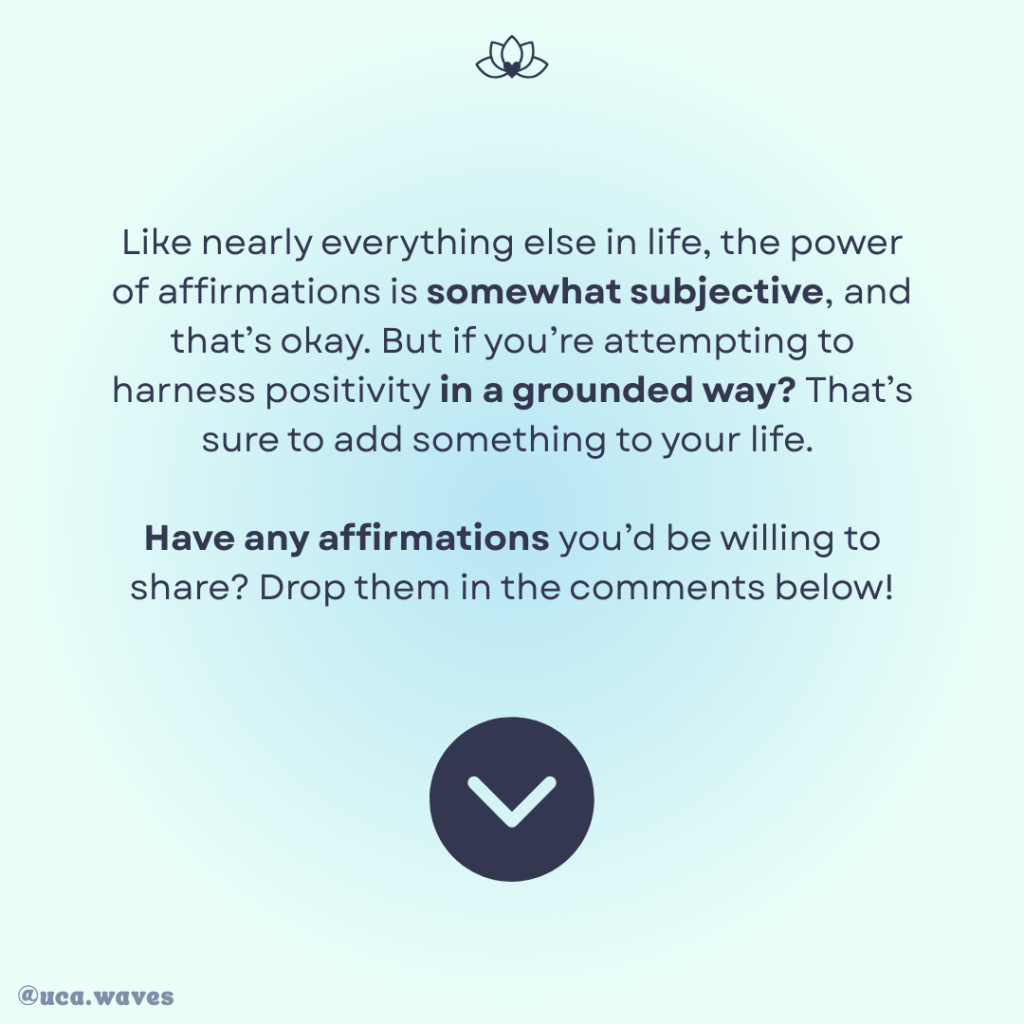
Final thoughts? Like nearly everything else in life, the power of affirmations is somewhat subjective, and that’s ok. But if you’re attempting to harness positivity in a grounded way? That’s sure to add something to your life. Have any affirmations you’d be willing to share? Drop them in the comments below!

 UCA WAVES
Leave a comment