

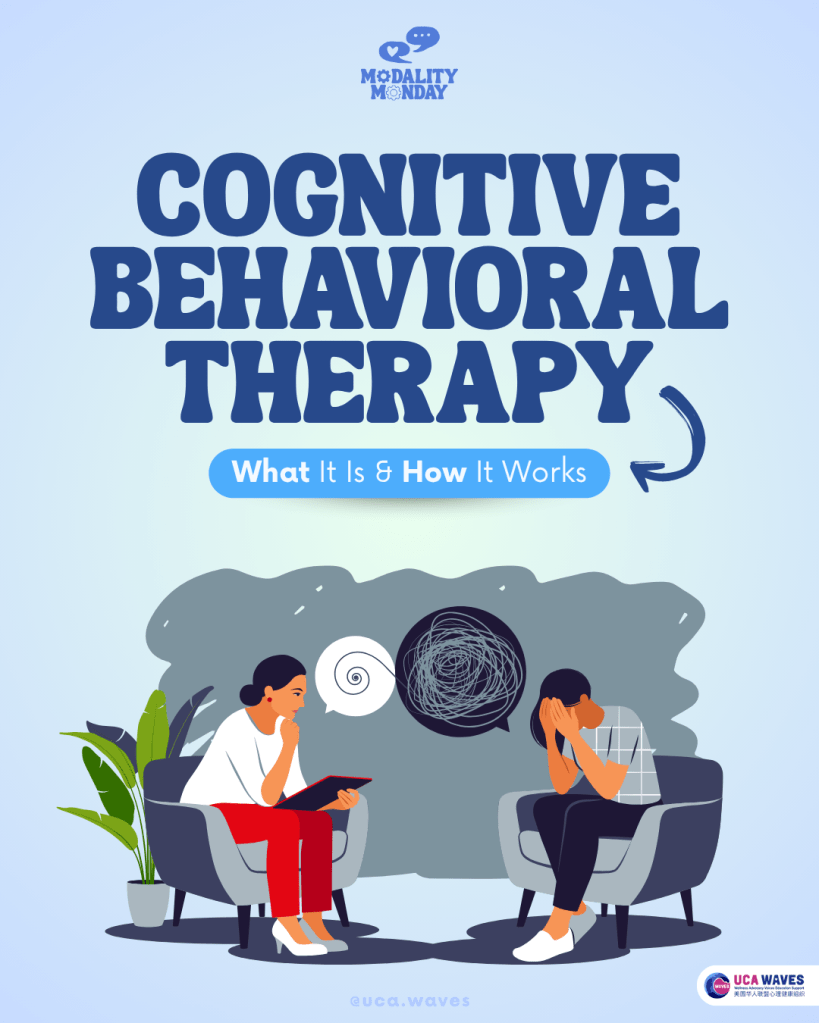
CBT: What It Is & How Does It Works
We’re kicking off the week with a new series: Modality Monday! We’re going to highlight different mental health treatment avenues, exploring how they work and where they might fall short, because the path to wellbeing isn’t one-size-fits-all. Today, we tackle Cognitive Behavioral Therapy…Let’s dive in!
What is CBT?
Cognitive Behavioral Therapy, or CBT, is a widely used, research-backed form of talk therapy that helps people better understand the connection between their thoughts, feelings, and behaviors. It’s proven effective for a variety of mental health concerns including depression, anxiety, substance use, eating disorders, relationship issues, and even severe mental illness.
At its core, CBT is based on the idea that unhelpful thinking patterns and learned behaviors contribute to emotional challenges—and that by changing these patterns, individuals can feel and function better.
CBT Strategies:
- Learn to recognize one’s distortions in thinking that are creating problems, and then to reevaluate them in light of reality.
- Gain a better understanding of the behavior and motivation of others.
- Use problem-solving skills to cope with difficult situations.
- Learn to develop a greater sense of confidence in one’s own abilities.
- Face one’s fears instead of avoiding them.
- Use role playing to prepare for potentially problematic interactions with others.
- Learn to calm one’s mind and relax one’s body.
Where does CBT fall short?
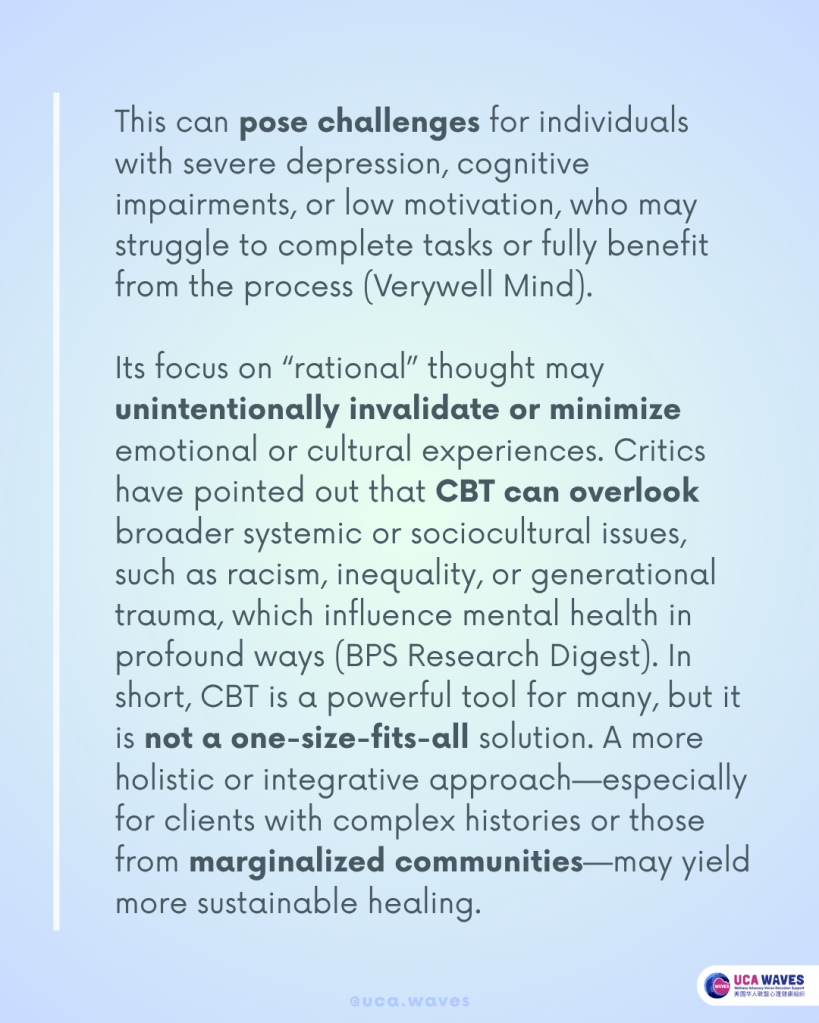
While Cognitive Behavioral Therapy (CBT) is a highly effective and well-researched approach, it does have limitations. One of the primary critiques is that CBT tends to focus on present thoughts and behaviors, which may not fully address deep-rooted emotional issues or past traumas. For individuals dealing with complex trauma, early attachment wounds, or unconscious emotional conflicts, approaches like psychodynamic therapy or EMDR may be more appropriate (Psychology Today). Additionally, CBT requires a high level of motivation and cognitive engagement from the client—it involves structured sessions, homework, and critical thinking. This can pose challenges for individuals with severe depression, cognitive impairments, or low motivation, who may struggle to complete tasks or fully benefit from the process (Verywell Mind).
Its focus on “rational” thought may unintentionally invalidate or minimize emotional or cultural experiences. Critics have pointed out that CBT can overlook broader systemic or sociocultural issues, such as racism, inequality, or generational trauma, which influence mental health in profound ways (BPS Research Digest). In short, CBT is a powerful tool for many, but it is not a one-size-fits-all solution. A more holistic or integrative approach—especially for clients with complex histories or those from marginalized communities—may yield more sustainable healing.
Follow us as we explore various modalities! For more information on CBT, click on the button below.
 UCA WAVES
Leave a comment